Barnx Portfolio CMS
Built a production portfolio CMS using Next.js and Supabase, with authenticated content management, media storage, draft/publish workflows, first-party analytics, privacy controls and automated deployments.
THE PROBLEM
A professional portfolio becomes difficult to maintain when every update requires editing and redeploying code.
THE SOLUTION
I evolved the portfolio into a protected publishing system. The public site and custom admin now work together across content, media, analytics and professional positioning while preserving safe public fallbacks.
One controlled path from private editing to public delivery.
If Supabase is temporarily unavailable, selected public pages use verified file-backed content instead of exposing drafts or failing without useful content.
Content management
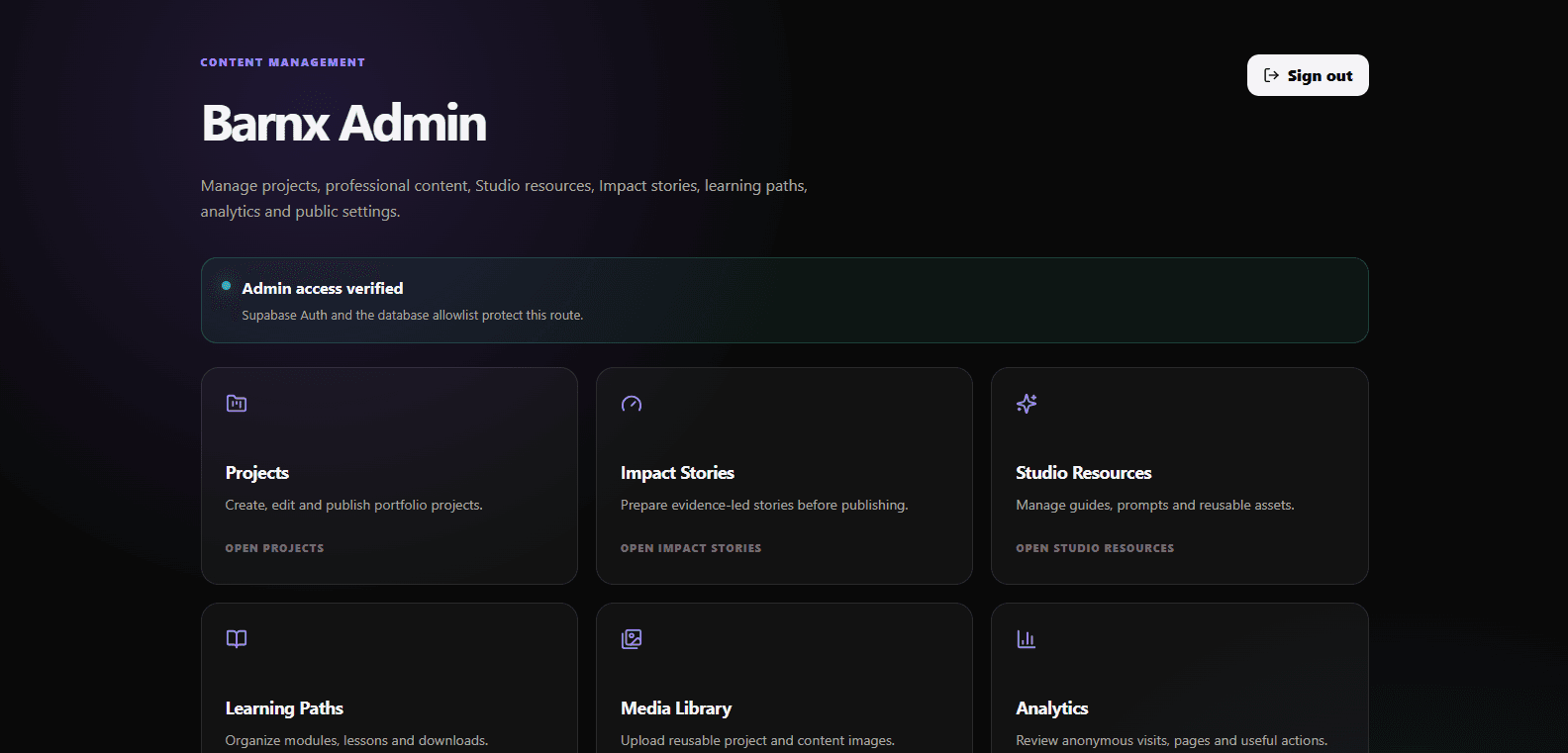
Projects, professional positioning, media, impact stories, resources, prompts, learning paths and public settings.
Publishing workflow
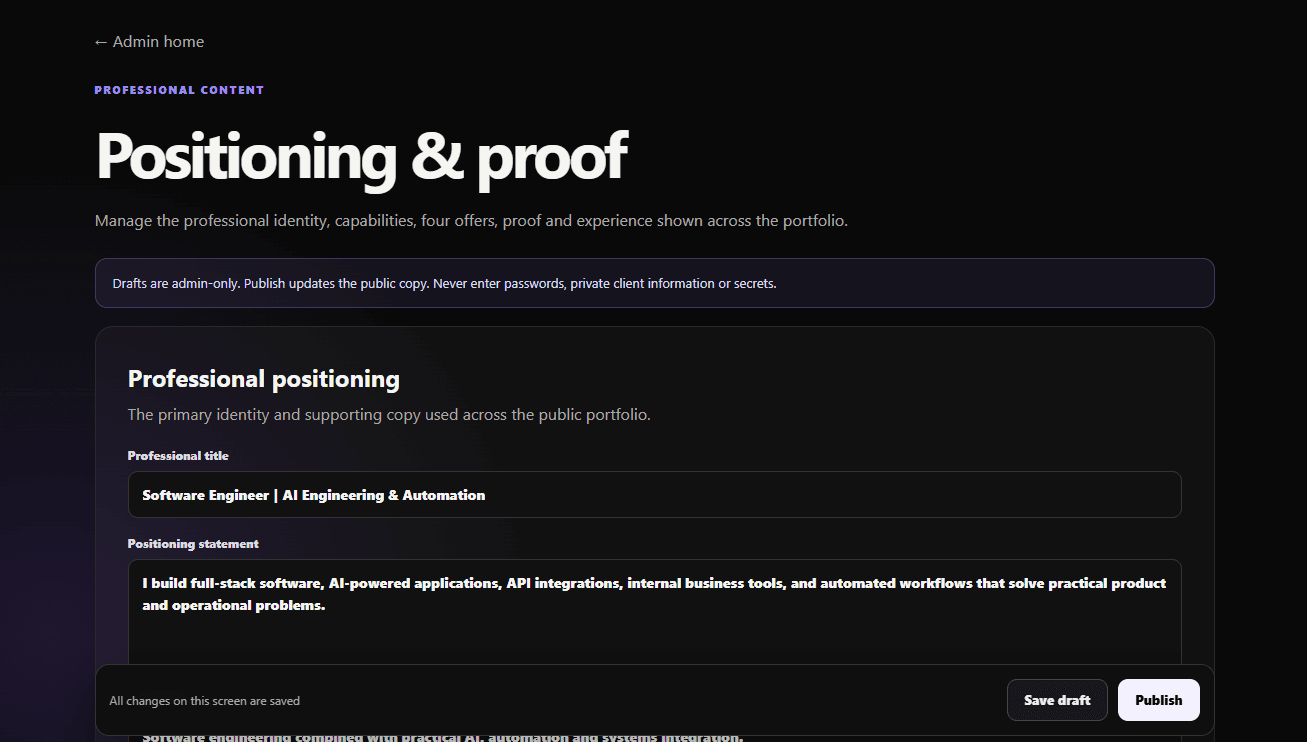
Private drafts, explicit publishing, ordering controls and server-side validation before content reaches public pages.
Media system
Protected Supabase Storage uploads, reusable assets, ordered galleries and reference-safe deletion.
Analytics
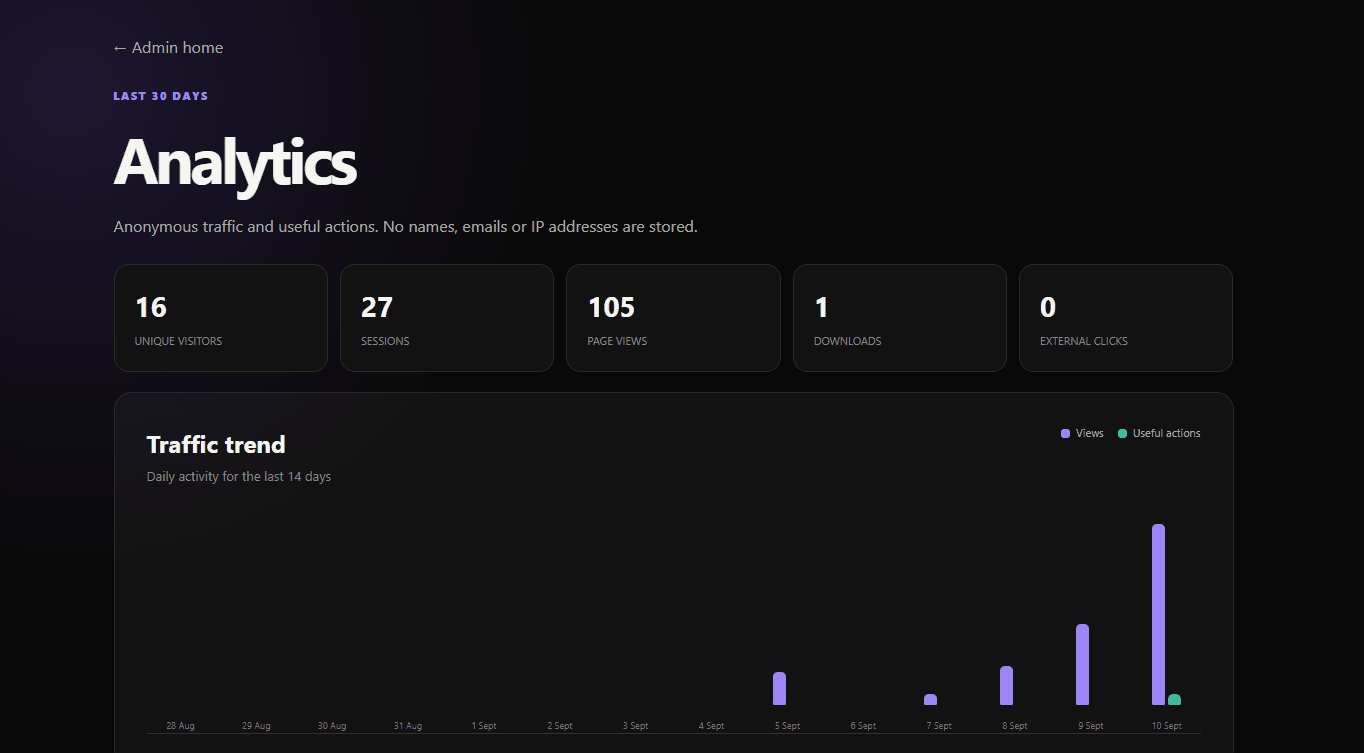
First-party visitor, session and page-view reporting with throttling, duplicate suppression and retention controls.
Resilient delivery
Published Supabase content is served when available, with verified file-backed fallbacks for public pages.
Production operations
Preview-first pull requests, automated Vercel builds and a documented deployment, backup and rollback process.
ENGINEERING PROOF
The system demonstrates full-stack delivery beyond the public interface.
- Authenticated admin workspace
- PostgreSQL content models
- Row-Level Security policies
- Supabase Storage controls
- Draft and publish states
- Structured validation
- First-party analytics
- Responsive public and admin UI
SECURITY FOUNDATIONS
Public access and admin authority are kept separate.
Public queries are limited to published content. Drafts remain admin-only. Content mutations require authentication and server-side validation, while storage policies constrain uploads and protected routes use no-store behavior.
This is evidence of applied security foundations—not a claim that the project is a general-purpose security platform.
Real interfaces from the protected CMS.
The admin itself remains private. These reviewed screenshots show the content-management, publishing and analytics systems without exposing credentials or sensitive data.
Private walkthroughA guided video walkthrough will be added separately.
Request access →Explore more work
View all projects →